Sixty-One: The North Dakota Road Roger Maris Carried to New York
Roger Maris was born in Minnesota, spent part of his childhood in Grand Forks, and became a remarkable athlete in Fargo. He was then the most watched hitter in America.
The ball left Roger Maris’s bat in the fourth inning on October 1, 1961. It traveled toward the right-field seats at Yankee Stadium, where a 19-year-old Brooklyn fan named Sal Durante caught it. The New York Yankees beat the Boston Red Sox 1–0 that afternoon because nobody else scored.
That compact box score contains one of baseball’s largest moments.
The pitcher was Tracy Stallard. The crowd numbered 23,154. The home run was Maris’s 61st of the season, one beyond the record Babe Ruth had set in 1927. It arrived in the final game, after months of arithmetic, argument, and attention that followed Maris from ballpark to hotel to restaurant.
The number became so powerful that it nearly swallowed the person who produced it.
To find Roger Maris again, look west from the Bronx. Look past the record book to a boy named Roger Maras, a railroad family moving onto the northern Plains, a Catholic school without a baseball team, and a football game in which the future home-run king kept taking kickoffs all the way back.
Born in Minnesota, raised on the North Dakota side
North Dakota can claim Roger Maris’s growing-up years. It cannot claim his birthplace.
Major League Baseball records that he was born Roger Eugene Maras on September 10, 1934, in Hibbing, Minnesota. His parents, Rudolph and Corrine, were Minnesota-born children of Croatian families. During Roger’s childhood, the family moved first to Grand Forks and then to Fargo.
The exact timing of that first move is less certain than many biographies suggest. The Society for American Baseball Research says Roger was five when the family came to North Dakota. A Fargo newspaper account placed in the Congressional Record during the 1961 chase said he left Hibbing at seven, spent three years in Grand Forks, and then moved to Fargo. Later accounts give still other years. The sequence is firm; false precision is not.
That distinction matters because the story is better without a hometown tug-of-war. Hibbing is where Maris was born. Grand Forks belongs to his childhood. Fargo is where the public athletic record sharpens into focus.
At Fargo Shanley, Maris played football and basketball. Baseball came through Fargo Post 2 American Legion because the school did not field the sport. The arrangement sounds like a limitation. For Maris, it became another route onto the field.
The afternoon every kickoff came back
The famous number before 61 was four.
In 1951, during Maris’s senior football season, Shanley defeated Devils Lake 32–27. The North Dakota High School Activities Association credits Maris with returning four kickoffs for touchdowns in that one game. Each score came on a return, before Shanley’s offense took the field.
It is the kind of statistic that sounds improved by every retelling, so the wording matters: four kickoff returns, not a mixture of punts, interceptions, and kicks. It remains astonishing without embellishment.
Maris was also building a baseball résumé beyond campus. He played for Fargo Post 2 from 1949 through 1951 and was the most valuable player on its 1950 state championship team. Scouts saw more than a future slugger. They saw speed, an arm, and an athlete who could influence a game before power entered the conversation.
Shanley graduated him in 1952. Football had earned him a scholarship opportunity at the University of Oklahoma, then one of the country’s great programs. College did not hold him. Maris left and chose professional baseball, the summer sport he had pursued outside school.
The decision did not carry him away from home at first. It carried him back across town.
Professional baseball begins in Fargo
Cleveland signed Maris before the 1953 season for a reported $15,000 and assigned the 18-year-old outfielder to the Fargo-Moorhead Twins of the Class C Northern League.
Imagine the usual minor-league story in reverse. A young player signs, packs, and disappears into an unfamiliar bus league. Maris entered professional baseball in the same community where he had gone to school and played American Legion ball. A 1960 profile recorded his plain summary: he could walk across town to play.
He did not stay long. Maris climbed through Keokuk, Tulsa, Reading, and Indianapolis. At Keokuk, manager Jo-Jo White encouraged the contact hitter to pull the ball, and the home-run totals rose. In 1955 the family legally changed its surname from Maras to Maris. That was the name printed beside the number 61 six years later.
Maris reached Cleveland in 1957 and hit 14 home runs as a rookie. The club traded him to the Kansas City Athletics during the next season. Then, in December 1959, the Yankees acquired him in a seven-player deal.
New York did not receive a one-season curiosity. In 1960, Maris hit .283 with 39 home runs and 112 runs batted in. He won the American League Most Valuable Player Award and a Gold Glove in right field. The Yankees reached the World Series.
Before the chase began, Roger Maris was already the league’s most valuable player.
The summer that became a countdown
Maris did not hit his first home run of 1961 until the Yankees’ 11th game. By early September, he and teammate Mickey Mantle had 50 apiece.
The pairing gave newspapers a daily drama: two Yankees pursuing Ruth, and each other. Mantle was the established star. Maris was the quieter arrival from Kansas City by way of Fargo. Their home-run totals passed back and forth while the Yankees pulled away in the pennant race.
Then the rules of the chase changed in public.
The American League had expanded and lengthened its schedule from 154 games to 162. Commissioner Ford Frick said records made under the two schedules should be listed separately if Ruth’s 60 was not matched inside the old limit. The ruling became the source of baseball’s enduring “asterisk” story. An official Yankees history clarifies that no literal asterisk was placed beside Maris’s total in the record book; the punctuation mark was a myth. The attempt to divide the achievement was real.
So was the strain. Reporters tracked each empty plate appearance. Spectators loyal to Ruth or Mantle did not always treat Maris as the hero of his own pursuit. Mantle’s regular season ended after his 54th home run because of injury, leaving Maris alone with the countdown.
On September 26, Maris hit No. 60 at Yankee Stadium. Four scheduled games remained. He sat out one, went homerless in two, and arrived at October 1 with one chance left.
Stallard’s fourth-inning pitch supplied it.
Maris finished the season at .269 with 61 home runs and 141 RBI. He won a second consecutive MVP Award. The Yankees won the World Series in five games over Cincinnati; Maris broke a ninth-inning tie with a home run in Game 3.
The record was an individual summit inside a championship season. That was a better fit for the player Maris had always been.
The rest of the ballplayer
Sixty-one invites a misleading picture: a hitter waiting for the next ball he could drive over a fence. Maris’s career keeps interrupting it.
He won only one Gold Glove, but his defense mattered after the home-run year. In the ninth inning of Game 7 of the 1962 World Series, Willie Mays drove a ball toward the right-field corner with Matty Alou running from first. Maris cut it off and got the ball back quickly enough to hold Alou at third. Willie McCovey then lined out, preserving a 1–0 Yankees championship victory.
Maris later spent two seasons with the St. Louis Cardinals. In the 1967 World Series, he hit .385 and drove in a team-high seven runs as St. Louis defeated Boston. It was his third championship ring.
Across 12 major-league seasons, Maris hit 275 home runs and drove in 850 runs. He appeared in seven World Series, won three, earned two MVP awards, and was selected for seven All-Star Games under the era’s two-games-per-season format. Injuries shortened several of his later years, but the career was never just one long summer.
Cooperstown preserves that point in cloth. In 2021, a collector donated a Yankees home jersey Maris wore during the 1961 and 1962 seasons to the National Baseball Hall of Fame. Maris has not been elected to the Hall, a debate that continues beyond this story. His jersey, however, entered the museum’s timeline as an artifact of the game.
His record stood as the major-league single-season mark until Mark McGwire passed it in 1998. It remained the American League and Yankees record until Aaron Judge hit 62 in 2022. A record can be surpassed without becoming small. Judge’s chase sent baseball back to Maris precisely because 61 had carried meaning for 61 years.
Fargo’s bargain with its reluctant museum subject
North Dakota honored Maris with the Theodore Roosevelt Rough Rider Award in 1964. The Yankees retired his No. 9 in 1984. Fargo chose a more unusual memorial: a museum in a shopping mall.
Maris initially declined the idea. According to West Acres, he eventually agreed on two conditions that made the exhibit sound less like a shrine and more like a public service: put it where people would see it, and charge no admission.
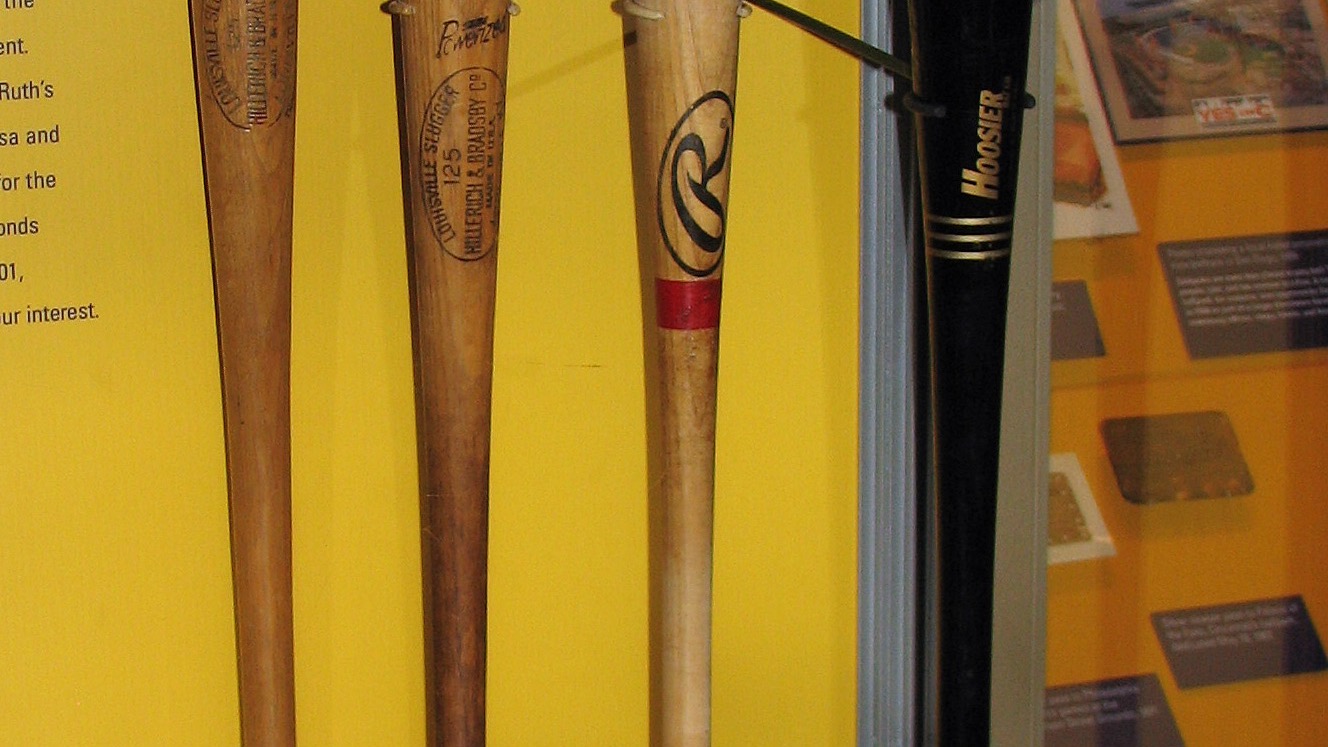
The Roger Maris Museum opened at West Acres in 1984. Its glass-fronted displays hold objects from his youth and major-league career, a replica 1961 locker, a replica of his Yankee Stadium monument, and a video room fitted with seats from Maris-era Yankee Stadium. It opened during Maris’s lifetime; he died the following year, on December 14, 1985, at 51.
The location is fitting. His public life had been defined by attention he did not always welcome. In Fargo, the record sits in an everyday corridor. People encounter it between the ordinary errands of their own lives, exactly where Maris asked that it be.
Visit the Roger Maris Museum in Fargo
- Where: Roger Maris Wing near Aquarium Court, West Acres, 3902 13th Avenue South, Fargo.
- Admission: Free, honoring Maris’s request.
- When: West Acres says the museum is viewable during all mall hours. Mall and holiday schedules can change, so check the official museum page and West Acres FAQ before leaving.
- What is there: Youth and major-league artifacts, the replica locker and monument, autographed baseballs, historic footage, and original Yankee Stadium seats.
- Shopping note: West Acres currently says the museum has no gift shop.
This is not a detached building with timed tours. It is a compact, self-guided exhibit in an active shopping center. That makes it easy to pair with another Fargo stop or fit into a family outing. Slow down enough to look beyond the 61. The Shanley and American Legion years explain why Fargo regards the story as its own.
What North Dakota can honestly claim
Roger Maris was not born in North Dakota. He did not play school baseball at Shanley, and Fargo did not hit those home runs for him.
North Dakota’s claim is more substantial than a corrected birthplace.
Grand Forks was part of his childhood; Fargo was where his public athletic record took shape. Shanley revealed an athlete who could turn four kickoffs into four touchdowns. Post 2 gave him serious baseball when school could not. The Fargo-Moorhead Twins let his professional career begin at home. Long after New York turned each swing into a referendum on Babe Ruth, Fargo offered a public museum on the terms Maris chose.
The number 61 belongs to baseball. The road to it runs through North Dakota.
See more famous people from North Dakota and their documented ties, or use the Fargo-to-Medora road-trip guide to fit the museum into a longer westbound route.
Source notes
Institutional records establish the dates, statistics, honors, and current visitor information. Biographical sources are used for context, with disagreement in the childhood timeline stated rather than silently resolved.
MLB player record for Roger Maris and MLB’s career review: birthplace, high school, major-league dates, career totals, awards, teams, and 1967 World Series performance.
North Dakota High School Activities Association alumni record: 1952 graduation, Shanley sports, four kickoff-return touchdowns, Fargo Post 2 seasons and championship, signing, awards, titles, and career totals.
Bill Pruden’s SABR BioProject biography: family background, move to North Dakota, Oklahoma scholarship, Fargo-Moorhead assignment, minor leagues, trades, 1961 chronology, later career, and death.
MLB/Yankees histories of the 1961 team, the final home run, and the pursuit’s last days: schedule controversy, asterisk myth, Mantle’s exit, attendance, Stallard, Durante, inning, and 1–0 score.
National Baseball Hall of Fame accounts of Maris’s 1961 jersey, the corrected statistical record, and the 1962 World Series finish, plus MLB’s year-by-year statistical record and 2021 Golden Days ballot explainer: corrected 141 RBI total, World Series homer, jersey donation, Hall of Fame ballot status, and the Mays–Maris–Alou play.
Childhood chronology cross-checks: a 1961 Fargo account preserved in the Congressional Record and SABR support Hibbing → Grand Forks → Fargo but conflict on the first move’s year or Maris’s age.
North Dakota governor’s Rough Rider biography and MLB’s Aaron Judge record review: 1964 award, Fargo upbringing, Yankees years, and the duration of Maris’s major-league, American League, and Yankees records.
Visitor references: the official Roger Maris Museum page, West Acres FAQ, and North Dakota Tourism listing. These establish location, free admission, exhibit contents, access during mall hours, address, and current lack of a gift shop.
Contemporary and retrospective context: a 1960 New Yorker profile documents Maris’s own account of beginning organized baseball in Fargo and playing professionally across town; a 1991 Los Angeles Times report confirms that Shanley had no baseball program.
Facts and visitor references last checked August 7, 2026. Spot an error? Read our editorial standards and corrections policy.