Before the Rings: Phil Jackson’s North Dakota Apprenticeship
Long before Chicago, Los Angeles, and a record 11 championships as an NBA head coach, Phil Jackson learned how a group becomes a team in Williston and Grand Forks.
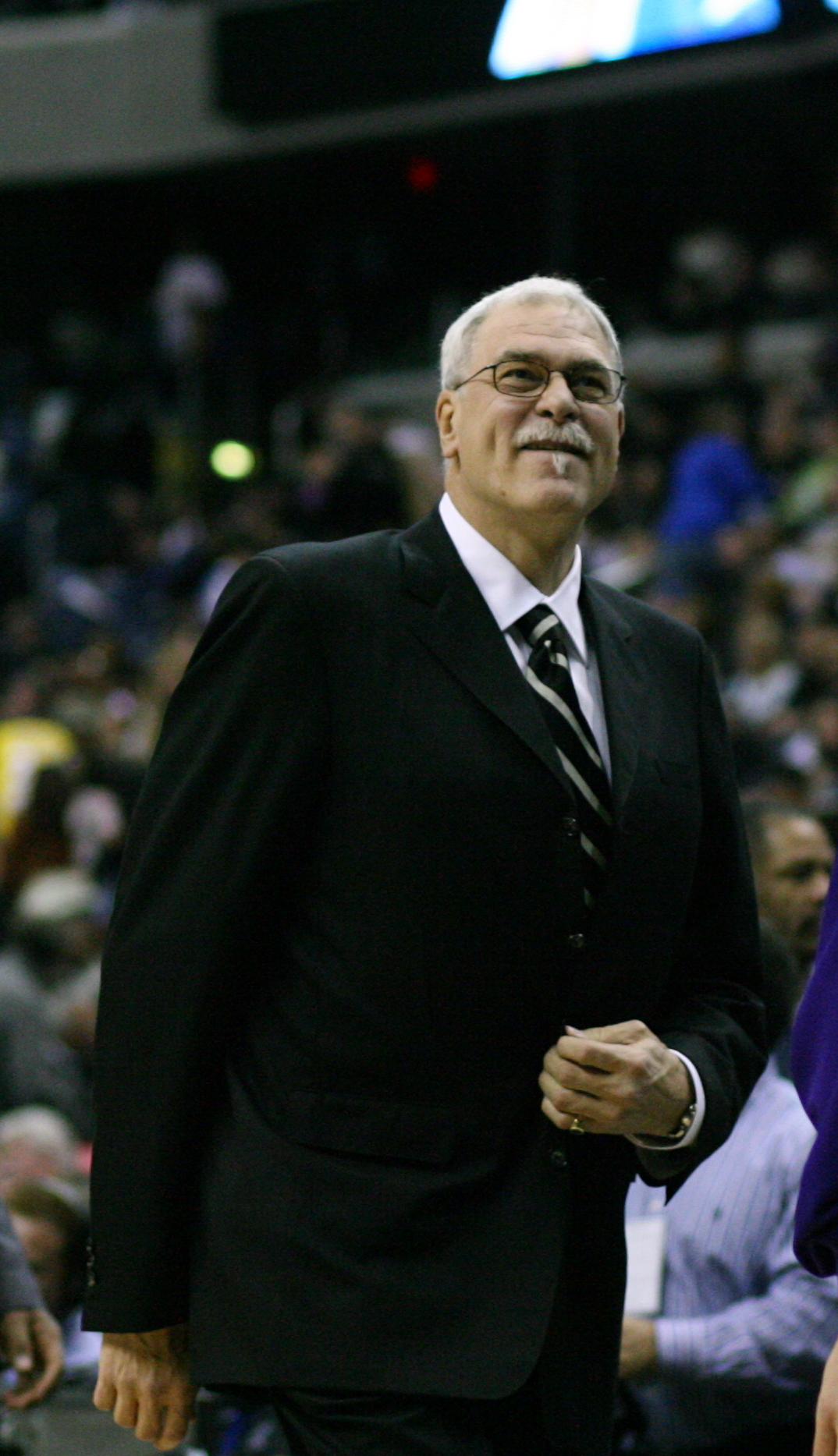
The earliest major championship on Phil Jackson’s public record did not come with champagne, a parade, or a diamond-studded ring. It ended with a score in Grand Forks: Williston 64, Grand Forks Central 50.
That was the 1963 North Dakota Class A boys championship. Jackson was a Williston High School senior, not yet the “Zen Master,” not yet a New York Knick, and not yet the coach trusted with some of the largest personalities in professional sports. He was a long-limbed western North Dakota athlete whose future could still have gone in several directions.
Basketball won. But the revealing part of Jackson’s story is not simply that a famous coach once played in North Dakota. It is that several ideas later associated with his NBA teams can be traced to experiences he described on the northern Plains: discipline, shared purpose, intellectual curiosity, and the effort to make five players act as one.
North Dakota did not predetermine 11 coaching titles. Michael Jordan, Scottie Pippen, Shaquille O’Neal, Kobe Bryant, Tex Winter, and many others belong in any honest account of those championships. Still, before Jackson could lead dynasties, Williston gave him a way onto the floor, and the University of North Dakota taught him how demanding team basketball could become.
The move that opened Friday night
Jackson was born on September 17, 1945, in Deer Lodge, Montana. Both of his parents were Pentecostal ministers. The North Dakota governor’s Rough Rider biography describes them as fundamentalist evangelical preachers who had taken an oath of poverty; Jackson’s own accounts emphasize the structure, belief, and communal ritual that filled the household.
The family moved from Montana to Williston in 1956. That change mattered for a reason more practical than mythology.
In a 1996 Fresh Air interview, Jackson explained that his older brother had been unable to play high-school basketball in Montana because Friday games conflicted with Friday church meetings. The Williston congregation held weeknight services on Wednesday and Thursday instead. Friday and Saturday games no longer collided with worship. For Phil, sports became possible within the family rules.
Basketball was not entirely foreign territory at home. Jackson said his mother had played and lettered in high-school basketball and still liked to shoot. His parents accepted sports so long as they did not interfere with church. That boundary helped produce a life divided between two intense worlds: the sacred community of his upbringing and the physical freedom of athletics.
He did not leave one world behind when he entered the other. Decades later, Jackson wrote that he had watched his parents create community amid the difficult life of the Montana and North Dakota plains. Though he moved away from their fundamentalism, he believed the rituals of people gathering around something larger than themselves influenced his leadership.
Before any meditation session in an NBA practice, there was a preacher’s household in Williston.
The Coyote who could reach both doors
At Williston High, Jackson played for coach Bob Peterson. He also threw the discus and played baseball, but his dimensions made basketball recruiters look twice.
Jackson later used an almost cartoonish image to explain his reach: he said he could sit in the middle of a car’s back seat and open both front doors without leaning forward. Whether encountered in a gym or demonstrated beside a car, those arms caught the attention of Bill Fitch, the University of North Dakota coach who would eventually spend 25 seasons coaching in the NBA.
First came the state tournament.
The North Dakota High School Activities Association confirms that Williston defeated Grand Forks Central 64–50 for the 1963 Class A title. The victory is worth pausing over because it was not a footnote pasted onto Jackson’s later fame. It was an early experience of reaching the end of a season with a team still standing.
Years afterward, championship rings became the visible shorthand for his career. The more durable subject of his coaching, however, was the connection beneath the jewelry: how individuals submit some portion of themselves to a group without surrendering the talent that makes them valuable. Williston did not hand Jackson a finished philosophy. It gave him an early, concrete example of the feeling he spent the rest of his career trying to reproduce.
Bill Fitch raises the pressure
Jackson stayed in-state for college. At UND in Grand Forks, he entered a basketball program that was about to become one of the strongest in the school’s small-college history.
Bill Fitch was far more severe than Peterson. Jackson remembered the former Marine as tough, direct, and constantly demanding improvement. Fitch’s teams pressed the full length of the court. The scheme suited a 6-foot-8 player with unusual reach, quickness, and a willingness to chase the ball. Jackson’s college nickname was “the Mop,” he wrote, because he so often ended up on the floor after loose balls.
The results arrived as a team before they arrived as individual stardom. In 1964–65, UND finished 26–5, won the North Central Conference, and placed third at the NCAA College Division national tournament. Jackson, then a sophomore, averaged 11.8 points and 11.6 rebounds. The next season, UND won the conference again and finished fourth nationally.
Jackson then surged. He was a first-team College Division All-American in 1966 and 1967 and the North Central Conference’s player of the year both seasons. Across three varsity seasons, the North Dakota High School Activities Association credits him with 1,708 points and 1,109 rebounds. As a senior, his unorthodox left-handed hook helped him average 27.4 points per game; his memoir gives the accompanying rebounding average as 14.4.
Those numbers show development, but Fitch’s larger lesson was structural. Pressure defense worked only when the group moved together. Repetition and accountability could turn unusual physical tools into a reliable role. Jackson would eventually coach with a different emotional temperature than Fitch, yet he never abandoned the premise that freedom becomes useful only inside a demanding system.
UND also gave him room beyond the gym. He graduated in 1967 after studying religion, philosophy, and psychology. Jackson did not arrive in Grand Forks already practicing Zen. In fact, he recalled that the first opening came while he was still a high-school senior: an older brother picked him up after a baseball game in Bismarck and talked about Zen during the late drive home to Williston. Jackson said the conversation opened his mind, but his sustained exploration and meditation practice came later.
That distinction matters. The famous coaching philosophy was not delivered whole on one North Dakota highway. A question was planted there. College gave Jackson disciplines in which to keep asking it.
New York teaches him to watch
The New York Knicks selected Jackson in the second round of the 1967 NBA draft, 17th overall. He made the league’s All-Rookie First Team, then spent most of his professional playing career as an energetic defender and reserve rather than a star.
His two Knicks championships came from sharply different positions. A back injury kept him out for the entire 1969–70 title season. He was a champion who could not play. In 1972–73, he returned as a meaningful member of the rotation, averaging 8.1 points during the regular season as New York won again.
The contrast may have been an accidental coaching education. Jackson learned the emotional geography of a roster: the view of the starter, the substitute, and the injured player watching everyone else perform. He also watched Knicks coach Red Holzman lead without smothering veteran players. In Jackson’s account, Holzman was disciplined and direct but listened because the players possessed information from inside the game that a coach on the sideline did not.
After finishing his playing career with the New Jersey Nets in 1980, Jackson took an indirect road into coaching. He worked as an NBA assistant, coached in Puerto Rico, and led the Albany Patroons to the 1984 Continental Basketball Association championship. Chicago hired him as an assistant in 1987 and promoted him to head coach in 1989.
The apprentice years were over. The experiments were about to become visible.
What the triangle really asked
Jackson did not invent the triangle offense. Tex Winter refined the system and became its great teacher. Jackson’s contribution was recognizing how closely its basketball logic matched the kind of leadership he wanted.
The triangle was not one diagram or a command to give the ball to a superstar. It spaced players so that several options appeared from the same alignment. Each player had to read the defense, move, and respond. All five had responsibilities. At its best, the offense replaced a string of instructions from the bench with coordinated decisions on the court.
That is where the branches of Jackson’s education meet.
From Fitch came defensive rigor and the demand that a team act in concert. From Holzman came respect for what players could see and solve themselves. From Jackson’s intellectual and spiritual searching came mindfulness, attention, and a suspicion of unchecked ego. From his parents’ churches came the remembered power of ritual and community.
Jackson used silence and mindfulness exercises with his teams. He assigned books. He sometimes resisted calling an immediate timeout so players had to solve a problem together. None of this replaced tactics, conditioning, or talent. Jackson himself told Fresh Air there was no substitute for gifted players. The methods were meant to create conditions in which talent could cooperate under pressure.
That point is easy to lose beneath the “Zen Master” nickname. Jackson was not simply serene, and his teams were not group-therapy circles that happened to play basketball. They defended, learned a complex read-and-react system, and competed relentlessly. Mindfulness was a tool for focus. The triangle was a tool for shared responsibility. The coach’s job was to make those tools credible to champions.
Eleven titles: the limits of a legend
With Chicago, Jackson won six championships: 1991, 1992, 1993, 1996, 1997, and 1998. His 1995–96 Bulls went 72–10, and he was named NBA Coach of the Year. With Los Angeles, he won five more: 2000, 2001, 2002, 2009, and 2010.
Eleven championships remain the NBA record for a head coach. Add the two Knicks title teams, and Jackson was part of 13 NBA championships as player and coach. The Naismith Memorial Basketball Hall of Fame enshrined him as a coach in 2007, before his final two Lakers titles had even been won.
But origin stories become dishonest when they make success look inevitable. Jackson coached historically great players. Tex Winter’s basketball architecture was essential. Jackson’s later tenure running the Knicks’ basketball operations ended in 2017 after three losing seasons, a reminder that a championship method could not simply be imposed on a different organization from an executive office.
The failure sharpens the achievement. Jackson’s great skill was not possession of a secret formula. It was building alignment among a particular group of people: an ability that depends on timing, trust, personnel, and limits.
What North Dakota can honestly claim
North Dakota cannot claim every idea Phil Jackson later explored, nor every victory earned by his players and assistants. It can claim something more interesting than ownership.
Williston was where a change in the weekly church schedule opened a path into competitive sports. It was where his mother’s love of basketball and his parents’ example of community coexisted with rules he would later question. It was where a high-school team gave him an early state title.
Grand Forks was where Bill Fitch hardened his game, where a nationally competitive team made coordinated pressure feel practical, and where studies in religion, philosophy, and psychology widened the frame. Even Jackson’s earliest remembered encounter with Zen belongs to a drive between Bismarck and Williston, though the practice itself came years later.
The road from the 1963 state final to 11 NBA coaching championships is too long to reduce to geography. Yet the first lessons were here: a role inside a group, a system larger than one player, and the possibility that disciplined attention could turn separate people into a team.
The rings came later.
Follow Jackson’s North Dakota trail
- Grand Forks: UND Athletics says its in-person Hall of Fame display in the Hawkway includes all previous inductees. The Hawkway connects the Hyslop at Memorial Village with the Nodak Insurance Company Sports Performance Center. Jackson is also included in UND’s virtual Hall of Fame. Confirm public building access with UND Athletics before making a special trip.
- Jamestown: The North Dakota Sports Hall of Fame, inside the Jamestown Civic Center, specifically lists Jackson among the state’s legends and displays photographs and signed memorabilia. The tourism page lists admission prices; check the venue’s current schedule.
- Bismarck: Jackson received North Dakota’s Theodore Roosevelt Rough Rider Award on July 30, 1992. His portrait by Vern Skaug hangs with other honorees in the State Capitol. The Capitol offers weekday tours year-round, with seasonal additions; use the official tour page for current times and entrance instructions.
One place not to navigate toward using an old article is the Phil Jackson Fieldhouse. The North Dakota High School Activities Association says the Williston athletic complex bearing his name operated only until 2016.
Jackson is one of several people whose best-known work happened elsewhere but whose formation here can be documented. Continue with other North Dakota chapters behind famous careers.
Source notes
Jackson’s published recollections support his beliefs and family memories; institutional records support dates, scores, statistics, honors, and visitor details.
North Dakota High School Activities Association, “NDHSAA Member School Alumni: Phil Jackson”: 1963 title, UND totals and honors, career chronology, and former fieldhouse.
UND Athletics’ team record and Bill Fitch Hall of Fame biography: seasons, national finishes, lineups, statistics, and conference titles.
Phil Jackson and Hugh Delehanty, Eleven Rings excerpt: Fitch, the triangle, player autonomy, family community, ritual, and leadership.
Fresh Air, 1996 Jackson interview: church schedules, his mother’s basketball, the Bismarck–Williston conversation, mindfulness, and talent.
UND Athletics’ 2008 honorary-doctorate announcement: graduation, studies, baseball, Fitch, and Rough Rider portrait.
Naismith Hall of Fame and NBA/Knicks biographies: birth, induction, title years, draft, Knicks seasons, and coaching record.
North Dakota governor’s Rough Rider biography: family, Williston, UND scoring, and the 1992 award.
Visitor references: UND’s 2026 Hall announcement, Discover Jamestown, and North Dakota’s Capitol tour schedule.
Facts and visitor references last checked August 7, 2026. Spot an error? Read our editorial standards and corrections policy.